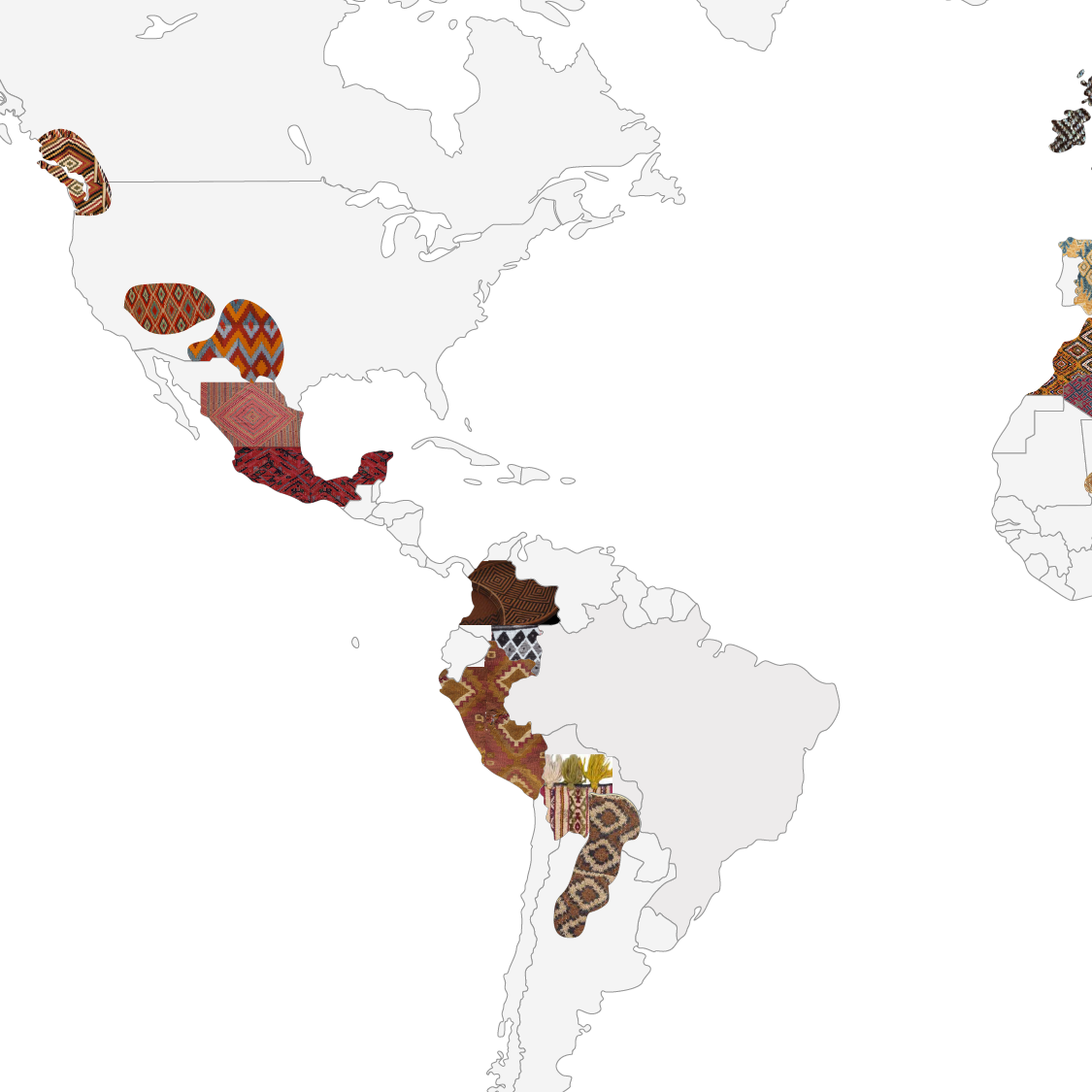
Pre-Columbian iconography beckons investigation into universal patterns embedded in the human unconscious and physiology.
Clicking on the photos will take you to the original website the photo originates from. (where available)
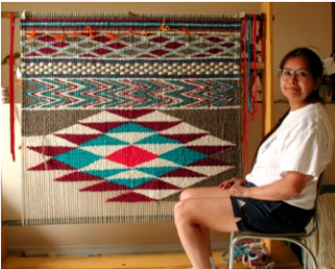
Vancouver. Musqueam peoples. Wool. Woven by Vivian Campbell in 2001. Now part of the collection of the University of British Columbia Museum for Anthropology. Accessed via https://moa.ubc.ca/wp-content/uploads/2014/08/Sourcebooks-Weavers.pdf
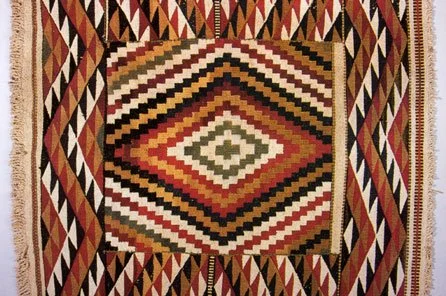
Coast Salish peoples. Twined mountain goat wool robe was collected by the Wilkes expedition in 1841. National Museum of Natural History, Smithsonian Institution, cat. no. 1891. Rights of the National Museum of Natural History. Accessed via https://www.burkemuseum.org/collections-and-research/heritage/artscultures/coast-salish-art/historical-coast-salish-art. More info at https://www.straight.com/arts/999691/fabric-our-land-salish-weaving-rediscovers-once-lost-art#
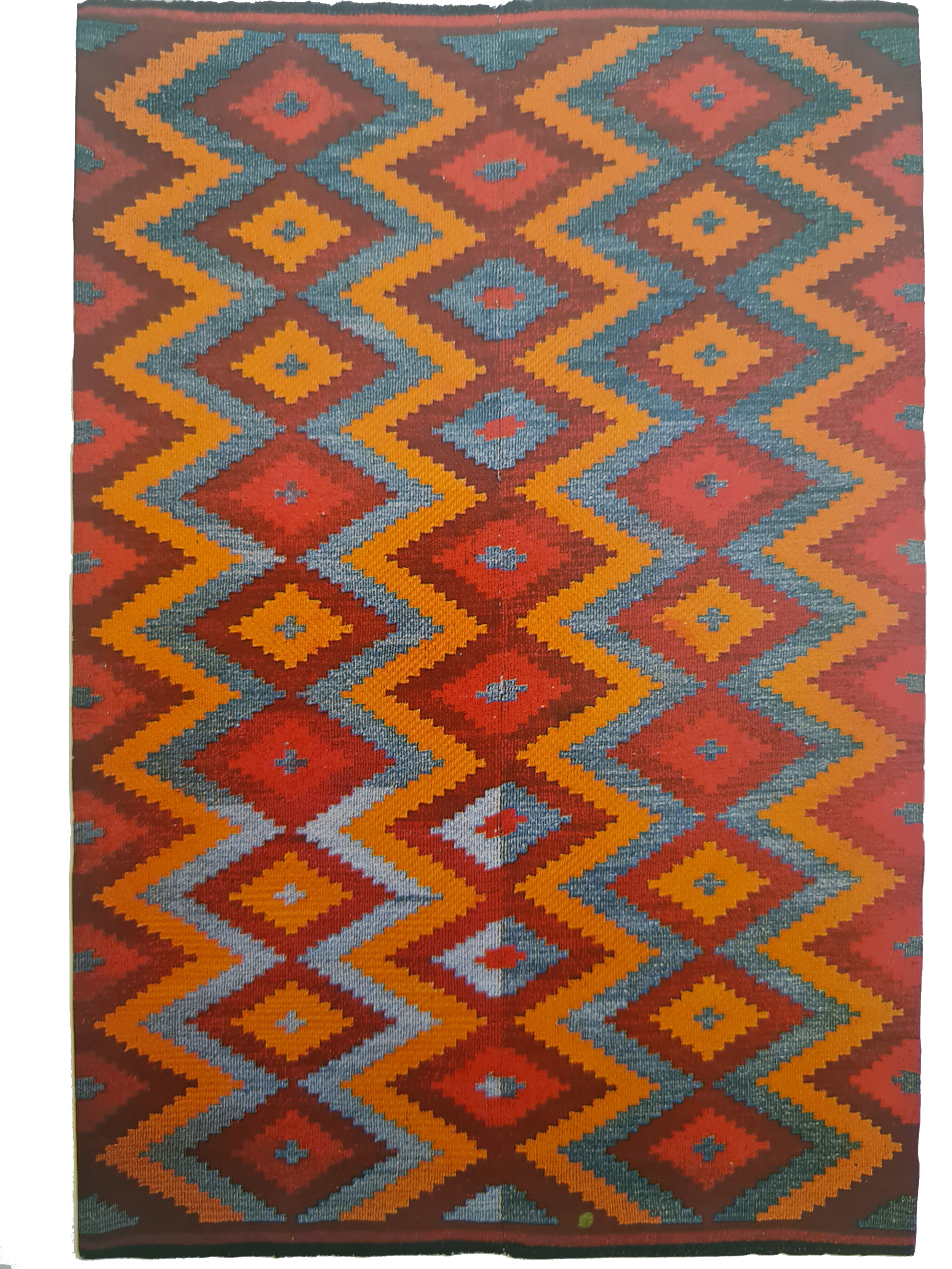
Rio Grande region. Blanket. 1880-1900, two widths seemed. Dimensions: 2.04m x 1.36m. Two-ply handspun wool: warp 2-ply handspun wool, weft 1-ply handspun wool. Colours: natural undyed light and dark, synthetic-dyed red, orange, turquoise. Spanish Colonial Arts Society Inc. Collection on loan to the Museum of New Mexico at the Museum of International Folk Art. Rights of the Museum of New Mexico Press. In “Rio Grande Textiles”, Fisher, N. ed.
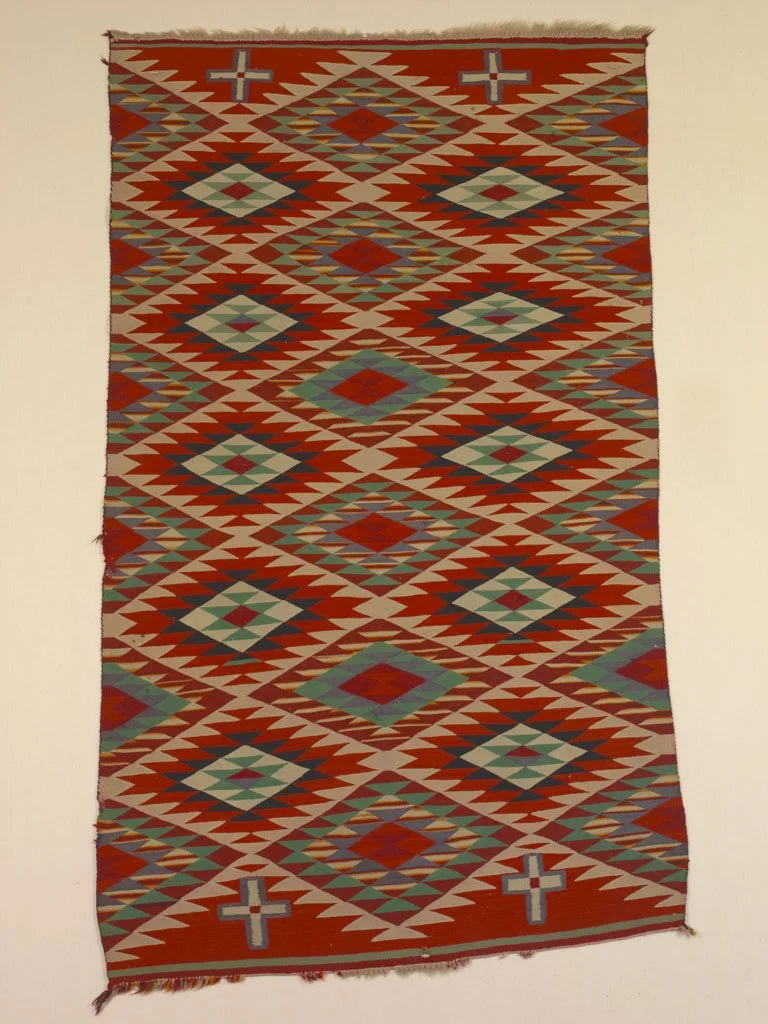
Arizona Desert Region. Navajo peoples. Blanket. Wool, Cotton. Dimension: 94 cm x 163cm. Tapestry weave. 1885-1890. Donated by Lowell Mrs Walter. Part of the Collection of the American Museum of Natural History. Accessed via https://exhibitions.bgc.bard.edu/shapedbytheloom/collection/
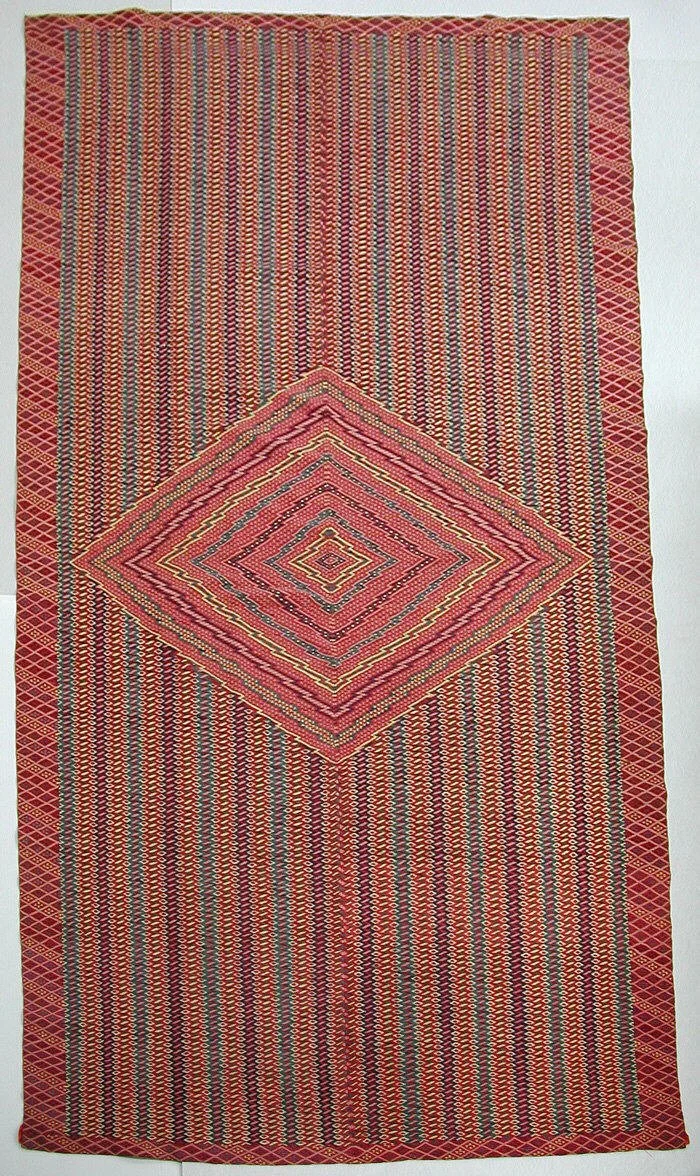
Mexico. Coahuila, Saltillo. Serape of Wool & cotton. Dimensions: 240cm x 131cm. 1800-1850. Gift of Sally Hart Sheehy, 2002. Long associated with use by horsemen—which accounts for their considerable size—they took on nationalist overtones after Mexico's independence from Spain in 1821. Horse culture and its accoutrements, from fine horse to fine serape, became distinctively and visibly Mexican, with Saltillo serapes being the epitome of the male fashion. Saltillos are named for the town in the Mexican state of Coahuila where many were made. Their consistent design, with its central diamond motif, appears to have been based on numerous sources as yet not fully defined. Public Domain foto. Accessed via https://www.metmuseum.org/art/collection/search/318970
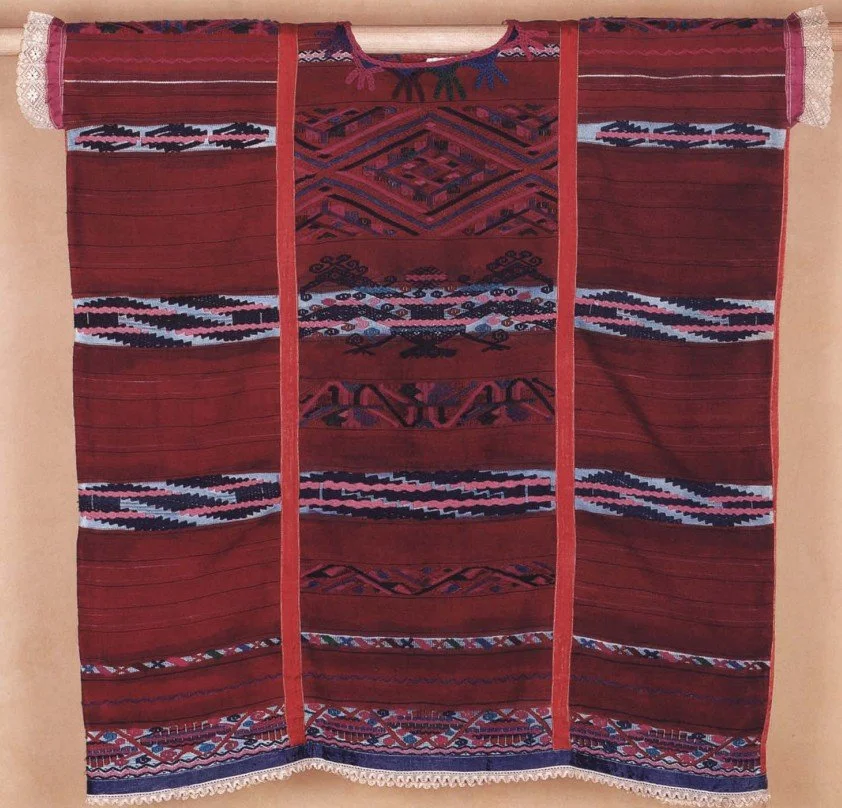
Mexico. Detail of Huipil from Chiantila area of northern Oaxaca. Because the weaving techniques that it demonstrates are rare and the quality of its orginal fabrication is exceptional, this huipil is one of the designated priority textiles in the collection at the reginal museum of Oaxaca. Foto by M. Zabe. More info in the catalogue The Unbroken Thread Accessed via https://www.getty.edu/publications/resources/virtuallibrary/0892363819.pdf
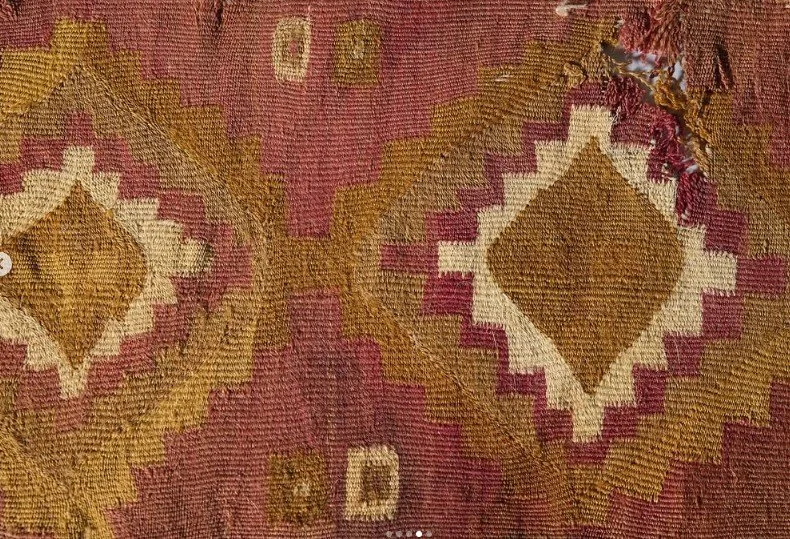
Chile. Fragment of Unku-Tunik with concentric stepped diamond motifs. Inka 1400-1532 AD. Southern Coast of Peru. Tapestry weave with camelid wool. Dimensions 21cm x 11cm. Museo Chileno de Arte Precolombina. Foto: Nicolás Aguayo. Accessed via https://museo.precolombino.cl/libro-de-exposicion-contactos-textiles-coloniales-de-los-andes-explora-dinamicas-culturales-producidas-por-el-contacto-entre-dos-mundos/
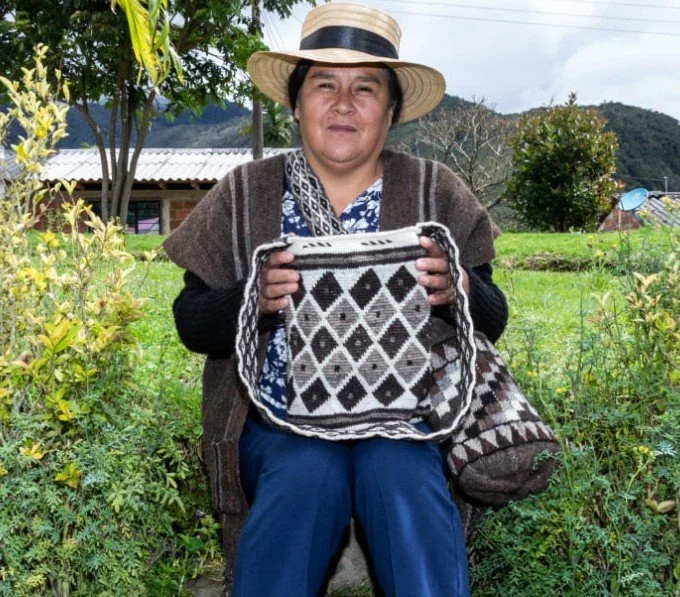
Colombia. Cauca region, Paez. Diva Eufemia is a weaver on the Cauca route. She is holding one of her creations: a bag (mochilla) in wool with tesselatng diamon motifs in white, grey, and black wool. Foto by Colombia Artesanal. Accessed via https://colombiaartesanal.com.co/artesanos/diva-eufemia-perdomo-mulcue/
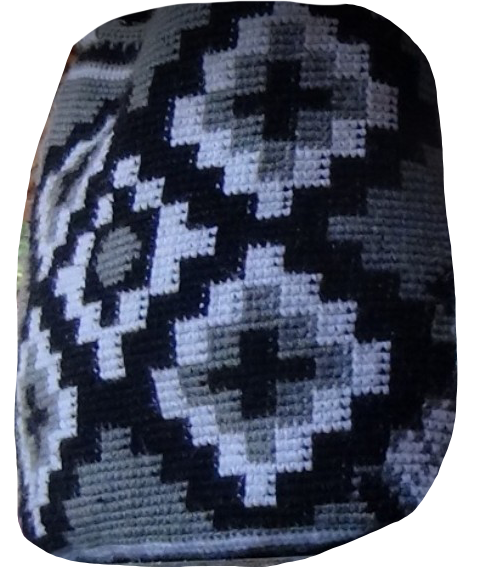
Woolen backpack with three meanings. “The dark part represents all the problems and conflicts that surround us,” says the artisan, adding that the white color symbolizes “purity, innocence, and peace.” The geometric designs, composed of rhombuses, represent “the journey of our lives; life is about ups and downs, about problems, falling and getting back up.” For the Nasa people, the backpack represents balance and harmony, which signifies peace and well-being (wët wët fxizenxi). For full text click the picture
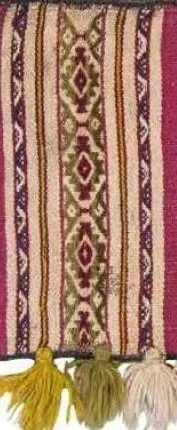
Bolivia. Meshwork Bag for cocoa or tobacco leaves. Dimensions: 24cm x 19cm. Early Republican period 1825-1900. Style: Southern Charkas Bolivar. Quechua culture .Lowlands Bolivia Chaco Region – Ayoreo. Camelid fibre. Warp-Faced weave. 18 attached tassels. Natural dyes: Biking Red: 19-1650 TPX, dark red-violet narrow stripes; Pristine: 11-0606 TPX, light off-white weft, stripes and figures; Earth Red: 18-1631 TPX, mid red-violet stripes and pampa; Purple Pennant: 19-3519 TPX, dark blue-violet figures; Turf Green: 17-0119 TPX, mid green figures and tassels; Chive: 19-0323 TPX, dark green figures. Foto used courtsey of Museo Nacional de Etnografia y Folklore, La Paz, Bolivia, Chile
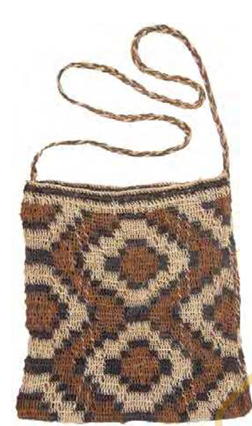
Chaco region (Bolivia-Argentina) Quadrangular meshwork bag and Detail thereof. “bolsa de malla”.Dimensions: 26cm x 29cm with braided strap 105cm. Late republican period 1900-1950. Weenhayek culture. Pina fibre (bromelia hieronimi). Meshwork bag structure with one element. Looping in technique with crossing S. Colours: Natural plant fibre tones and natural dyes: White Asparagus: 12-0104 TPX, off-white designs; Jet Black: 19-0303 TPX, black designs; Amber Brown: 17-1147 TPX, mid red-brown designs. Foto used courtsey of Museo Nacional de Etnografia y Folklore, La Paz, Bolivia, Chile